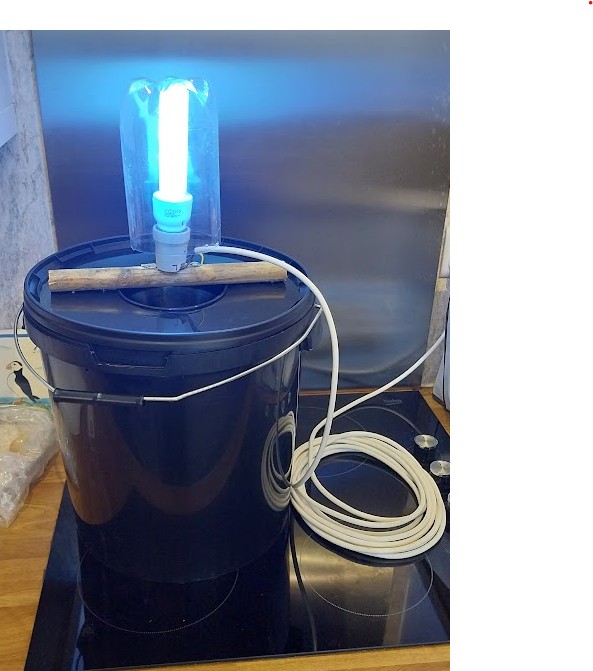
Our daughter asked John if he might be able to make a moth trap, based on a design by Butterfly Conservation website (LINK) Also shown in a YouTube video by Xander (aka Antboy) Video link
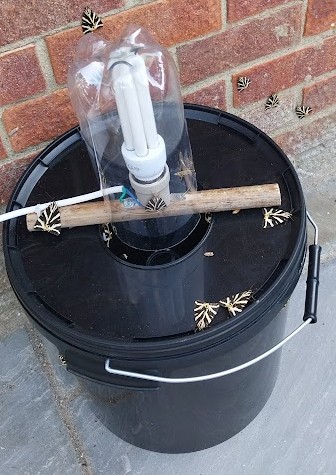
John liked the idea and sourced all the materials required and set to work. The fluorescent bulb is a special Ultraviolet lamp which attracts moths and other insects. The trap was made for our grandson Nat, and we had it in action for the first time outside on 31st July and 1st August. Nat loves Nature and studying all sorts of creatures.
Here is the completed working moth trap.
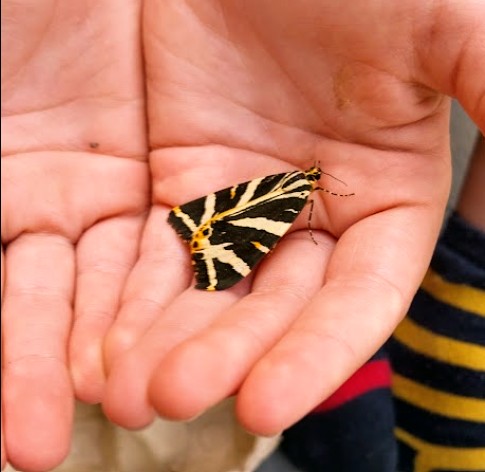
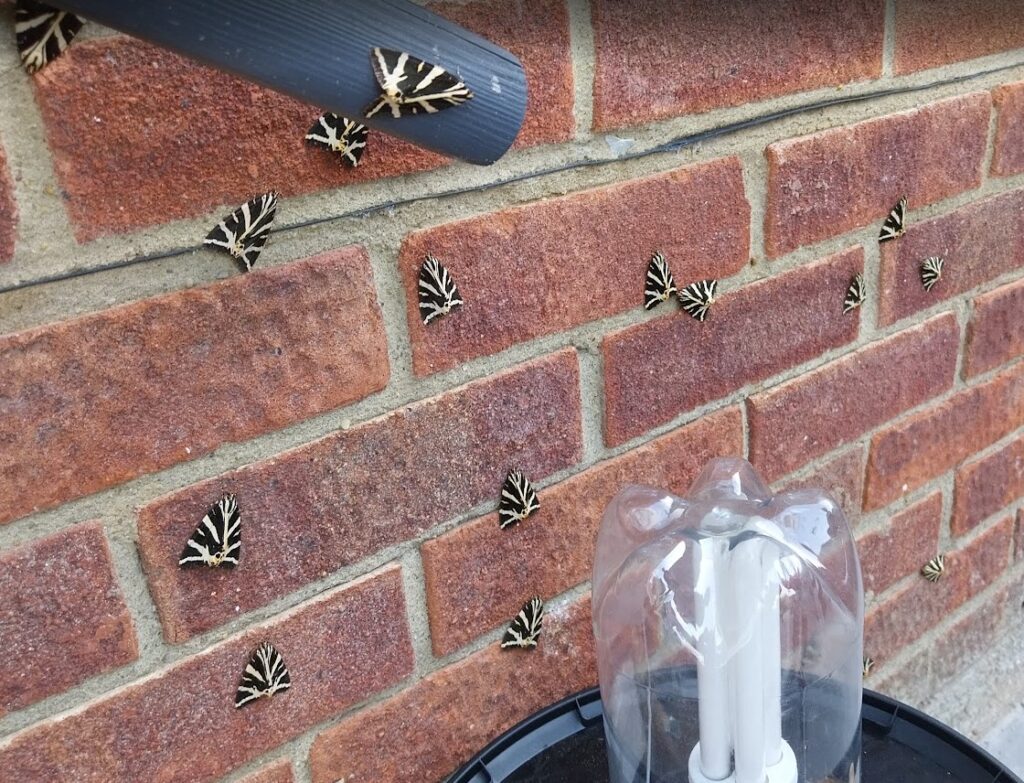
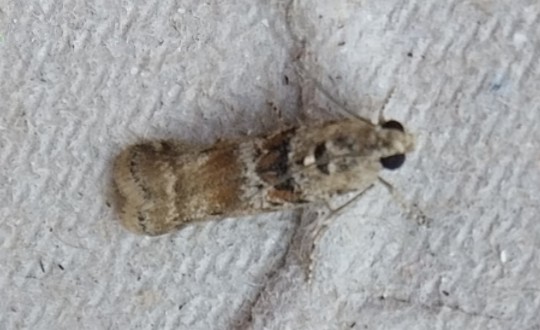
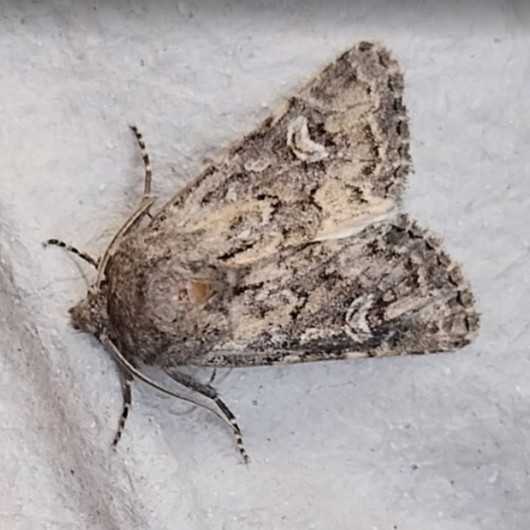
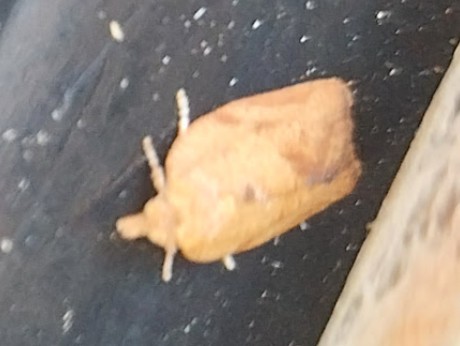
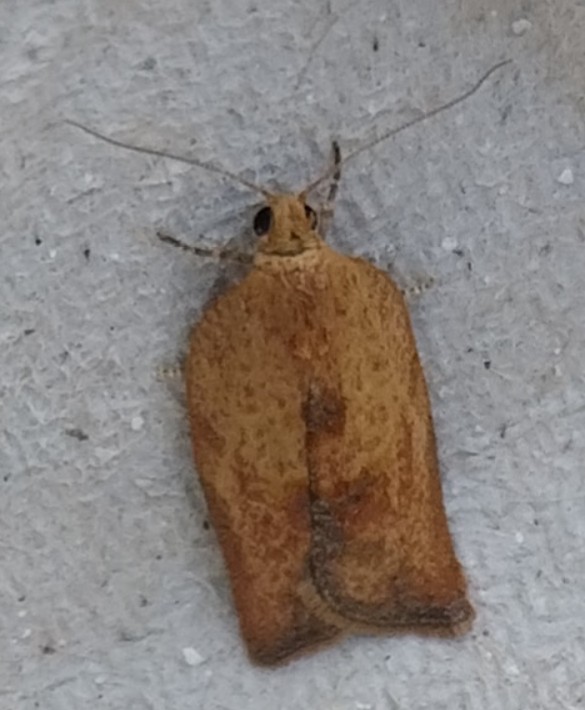
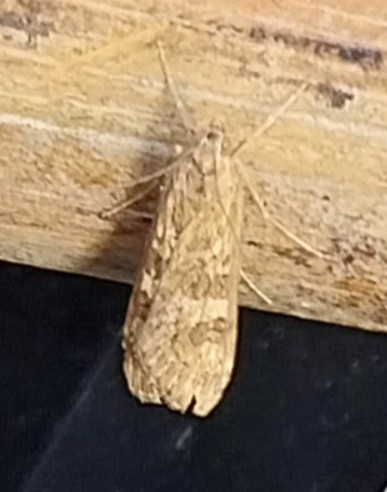
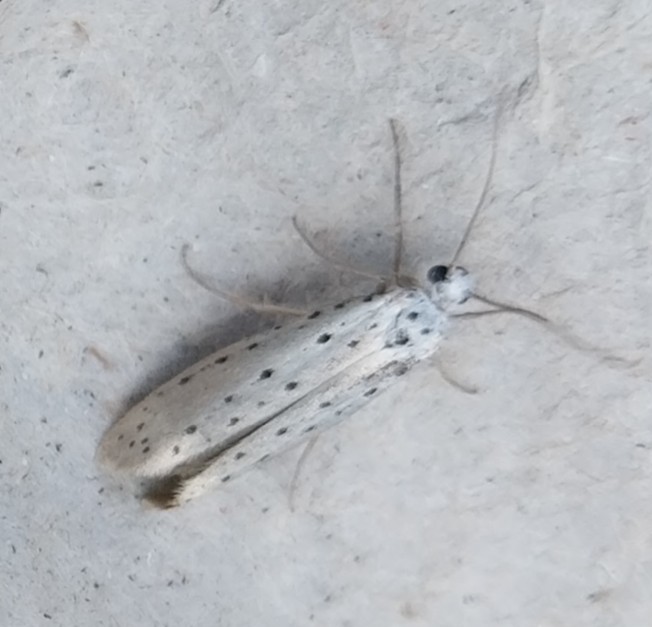
Here are some of the moths we caught (and released unharmed) during those two nights. As we are not moth experts, we needed the help of Mr Google to identify the pictures and we hope the identifications are OK
Jersey Tiger Moth – we knew this oneA wall of Jersey Tiger moths – Euplagia quadripunctariaIndian Meal Moth (Plodia interpunctella).Possibly a silver Y moth autographa gammaCommon Yellow Conch (Agapeta hamana).Female Light Brown Apple Moth (Epiphyas postvittana)Rush Veneer moth (Nomophila noctuella).Ermine moth from the genus Yponomeuta.Another picture of the trap with Jersey Tiger moths
If you want to make a trap, it is not too difficult for anyone who likes a bit of D.I.Y. so have a go and see what you can find in your garden.
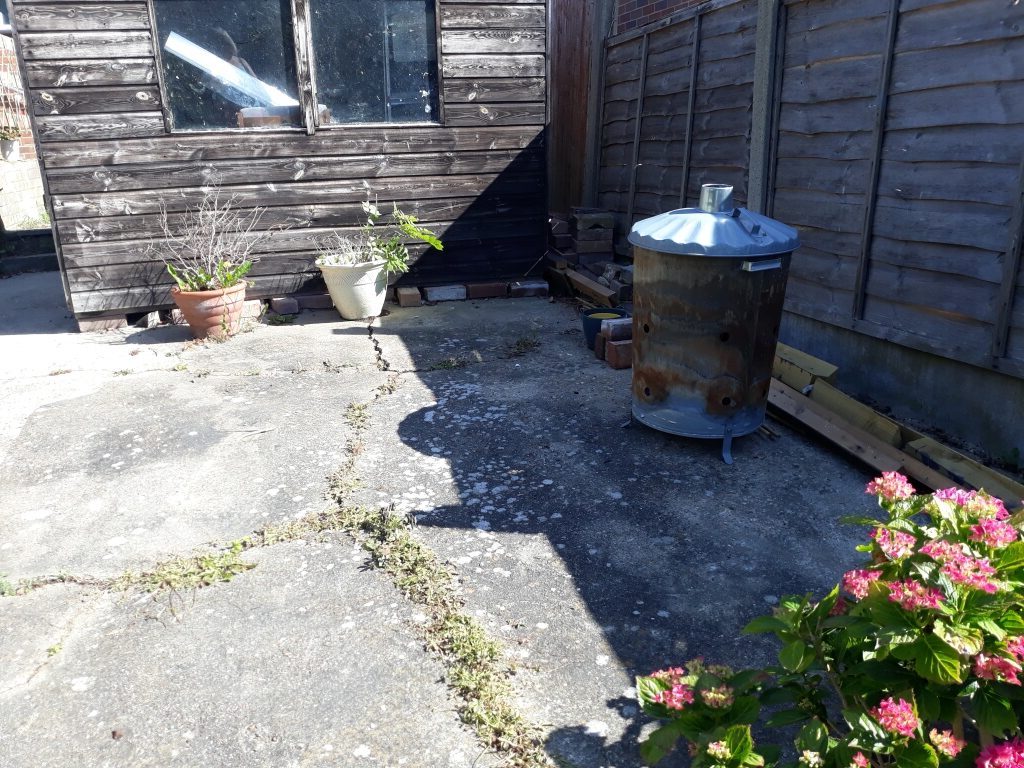
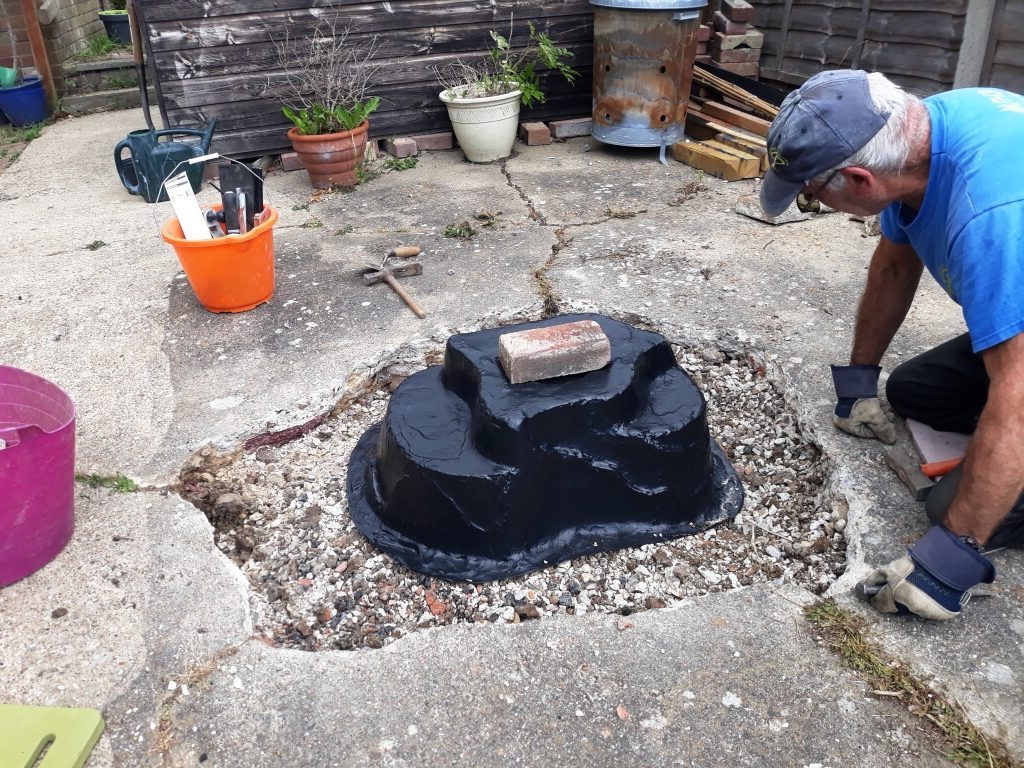
We moved into our bungalow over three months ago, we have been decorating and generally settling in . We have removed some of the weed resistant membranes from the flower beds in the back garden. There were some big old pot-bound plants which we moved into the flower beds. The ground is clay, with some pretty hefty tree roots in, we improved the soil with compost and mulched with bark chippings, The lawn is very uneven, with buttercups, clover and other weeds, the wood edging and regular mowing suffices for now. With pruning and weeding the shrubs are looking better, 3 pink hydrangeas are looking very pretty in flower. We love a water feature and want to attract some newts, other amphibians and insects, so last weekend we decided to order a wildlife pond liner. Made in Yorkshire and delivered promptly we just had to make a large hole in 4 inch thick concrete.
Pond Liner, with animal escape ramp.The cracks didn’t make it any easier.The concrete was reinforced with slabs, tarmac and even an old German gas barbecue.
It was pretty hard work, we kept saying that will be big enough, then coming to the conclusion we needed to get more concrete out.
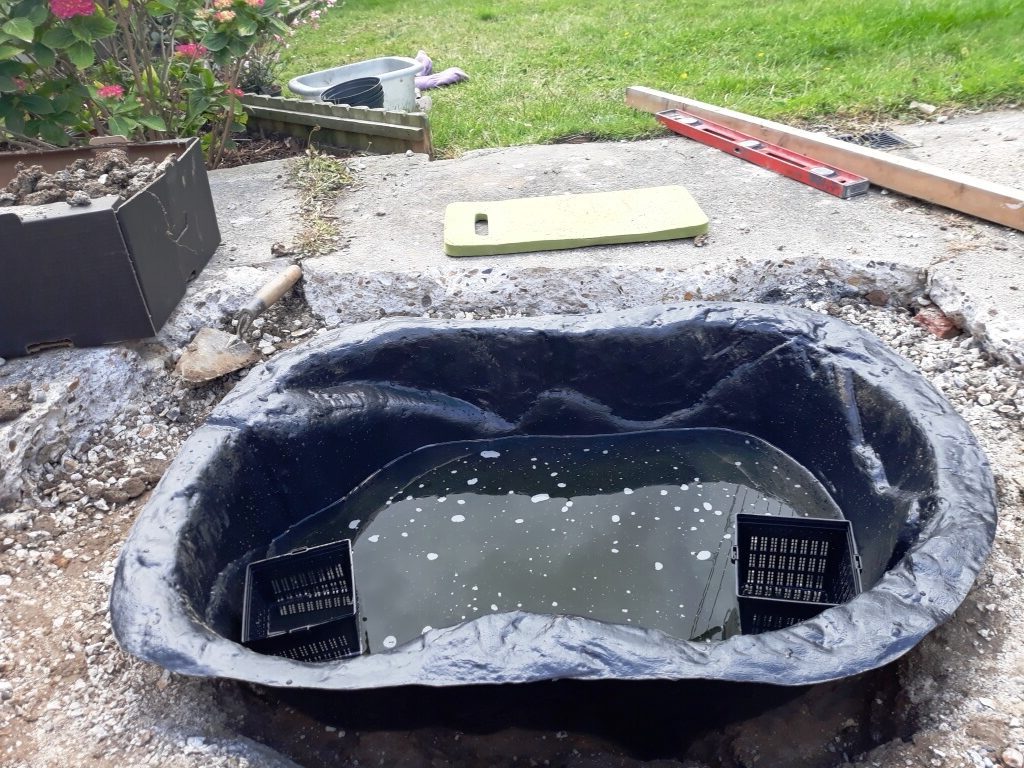
With room for plants.
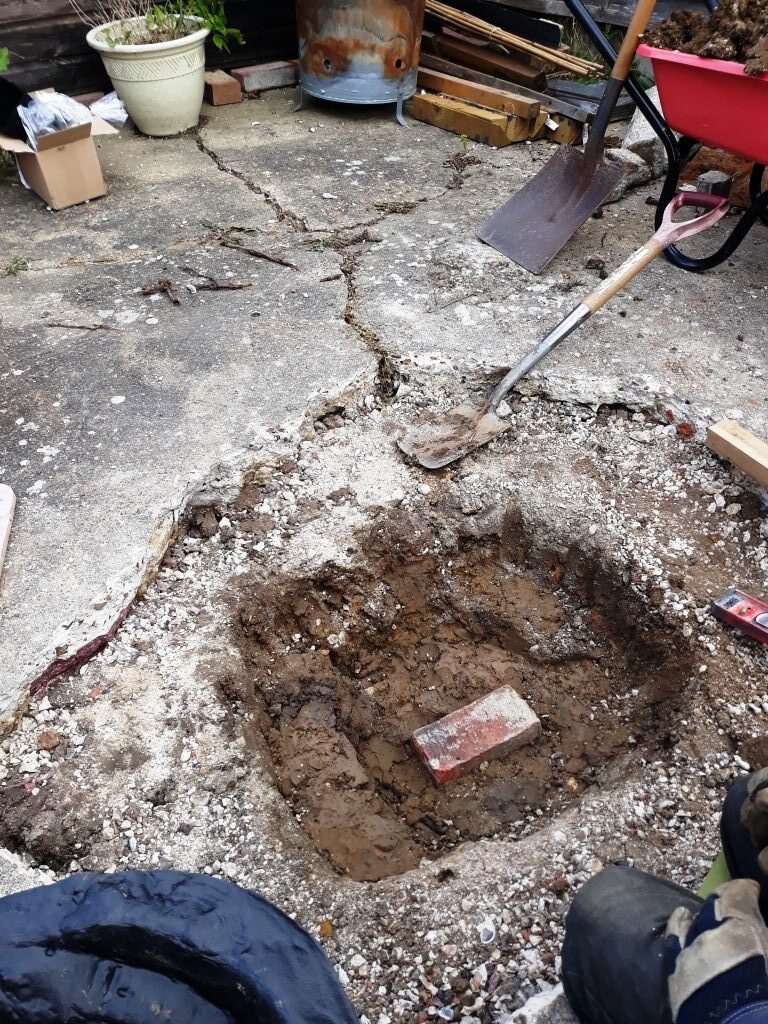
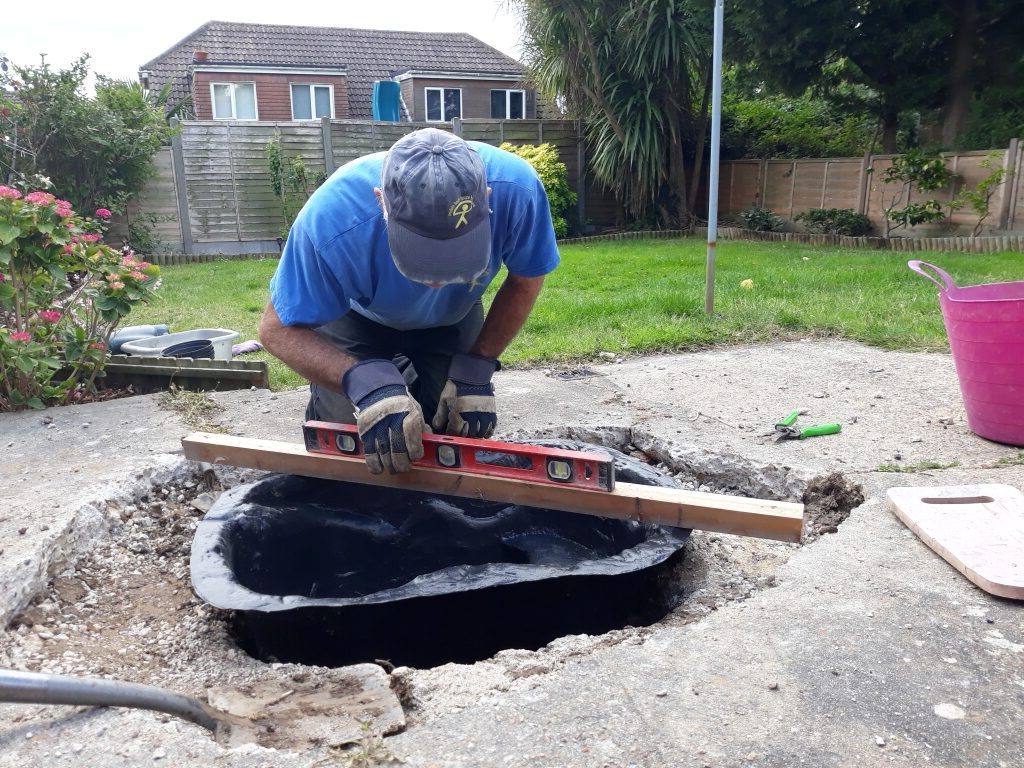
We now had to dig the hole, we separated the concrete chippings, from the heavy thick mud, the hole was big enough for the liner and check that it’s level too.
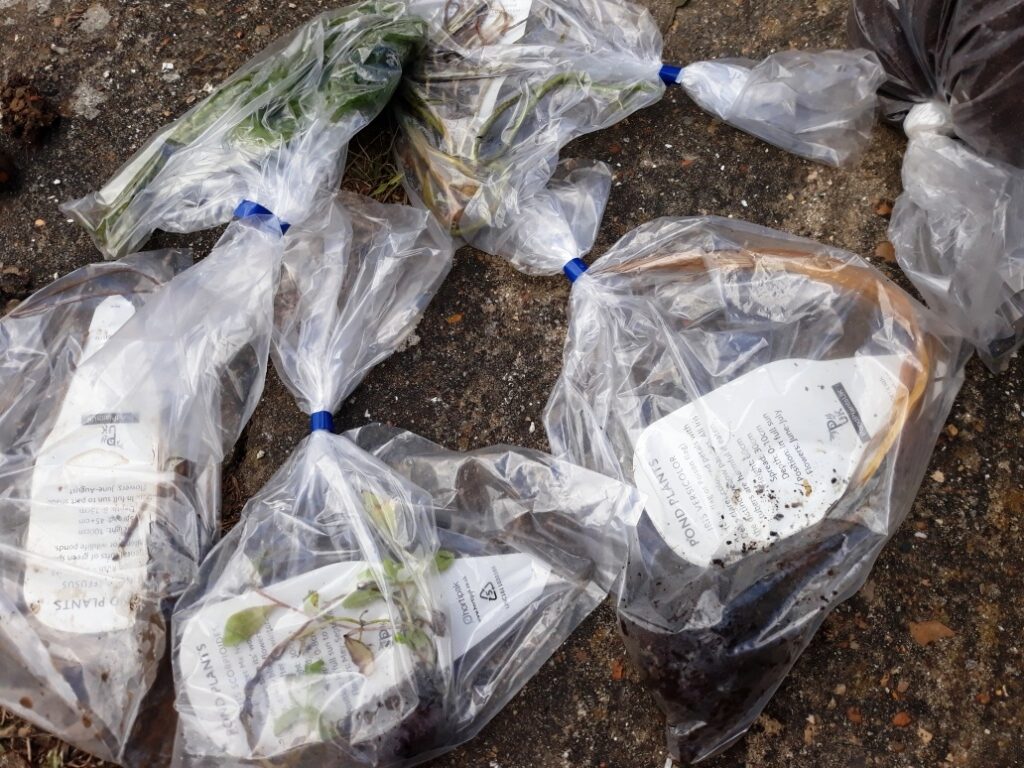
Happy with the pond liner’s position we started to fill it with water. The Aquatic plants had been delivered by the post lady.
We carefully back -filled around the liner, with sand and the clay.
Trying the water plant pots for best position and levels.There are a mixture of plants, an oxygenator, a waterlily for the deep water, also marginals, the iris looks very sad, but I will give them all a try.We mixed the clay, with peat and gravel to make a topsoil for the plants to provide some ground cover for any creatures.We split an iris from elsewhere in the garden and placed other plants ready for making the holes.We will put some gravel over the soil when the plants have settled, giving it a beachy feel. (Sea breezes)
Since moving to Kent we’ve set our trail camera up. We’ve seen the neighbourhood cats visiting. Big furry grey cat, tuxedo cat, tortoiseshell cat and all black cat. More exciting is this healthy looking fox, having a sniff round the garden.